
Views: 10 Author: Site Editor Publish Time: 2026-01-21 Origin: Site


In the industrial sector, electric motors are the core driving force behind machinery—powering everything from small workshop tools to large-scale production lines. Among the various motor types, single-phase and three-phase motors are the most commonly used, but selecting the right one can be challenging for industrial operators. The choice directly affects energy efficiency, operational stability, maintenance costs, and even long-term production benefits.
This guide simplifies the differences between single-phase and three-phase motors, focuses on practical industrial application scenarios, and provides a clear selection framework. It also introduces high-performance motor solutions tailored to modern industrial demands for energy conservation and intelligence.
To make an informed decision, it’s essential to grasp the fundamental characteristics of single-phase and three-phase motors—explained in simple terms without complex technical jargon.
A single-phase motor operates on a single alternating current (AC) power source, typically with voltages of 110V or 220V, which are common in small-scale workshops or auxiliary power systems.
Its design is relatively simple, with fewer internal windings and components, resulting in a compact size and low initial cost. However, single-phase current produces a magnetic field that oscillates back and forth rather than rotating continuously. For this reason, these motors require additional components like a capacitor or a starting winding to initiate rotor rotation.
Single-phase motors are primarily designed for low-power applications, generally ranging from 0.1kW to 7.5kW, and are best suited for intermittent or light-load operations.
A three-phase motor relies on three separate AC power supplies that are phase-shifted by 120 degrees. This unique power supply configuration generates a smooth, rotating magnetic field directly, eliminating the need for extra starting components.
These motors are engineered for durability and high performance: they feature robust windings, high power density, and minimal vibration during operation. Their power range is extensive, from 0.75kW to 500kW+, making them ideal for continuous, heavy-duty industrial tasks. Most industrial-grade three-phase motors comply with international efficiency standards such as IE3, IE4, or IE5, aligning with global energy-saving and carbon-reduction goals.
The following table highlights the critical distinctions between single-phase and three-phase motors, focusing on factors that are most relevant to industrial decision-making:
Comparison Criteria | Single-Phase Motors | Three-Phase Motors |
Power Supply | Single AC phase (110V/220V) | Three-phase AC (380V/460V, industrial standard) |
Power Range | 0.1kW – 7.5kW (low power) | 0.75kW – 500kW+ (medium to high power) |
Starting Mechanism | Requires a capacitor or starting winding | Self-starting (rotating magnetic field) |
Operational Stability | Pulsating torque, noticeable vibration | Stable torque, minimal vibration |
Energy Efficiency | Moderate (75% – 88%) | High (88% – 98%, IE3/IE4/IE5 compliant) |
Cost Performance | Low upfront cost (small power) | Higher upfront cost but lower long-term costs (energy + maintenance) |
Maintenance Needs | Higher (frequent capacitor replacement, winding wear) | Lower (fewer components, rugged design) |
Industrial Use Case | Auxiliary equipment, light loads | Core production machinery, heavy-duty operations |
The selection of a motor depends entirely on the specific industrial application. Below is a breakdown of which motor type fits different operational needs:
Single-phase motors are not designed for core production lines but excel in supporting industrial equipment, such as:
• Small air compressors (≤3kW) for powering workshop tools
• Miniature pumps for cooling or lubrication systems
• Ventilation fans for small workshops or storage areas
• Portable bench drills and grinders
Their compact size, easy installation, and compatibility with standard single-phase power make them a cost-effective choice for non-critical tasks that do not require continuous operation or high efficiency.
Three-phase motors are indispensable for heavy-duty industrial operations, powering mission-critical equipment like:
• Automated assembly lines, conveyor belts, and material handling systems
• Large industrial pumps, blowers, and HVAC units
• High-power compressors, generators, and metalworking machinery (e.g., lathes, milling machines)
• Wastewater treatment systems and industrial mixers
For example, a 160kW three-phase motor can drive a large conveyor system in an automotive factory, operating 24/7 with minimal downtime. Their high efficiency and durability directly impact production uptime, making them the preferred choice for large-scale manufacturing plants, chemical facilities, and energy-intensive industries.
Follow these four practical steps to choose the right motor for your industrial needs without overcomplicating the process:
First, calculate the power needed for your equipment. If the load exceeds 7.5kW, a three-phase motor is the only viable option—single-phase motors become inefficient and prone to overheating at higher power levels. For loads below 7.5kW, consider the operation frequency: continuous use (e.g., a small pump for a production line) still benefits from a small three-phase motor for better reliability.
Most industrial facilities are equipped with three-phase power (380V/460V) for core operations. If your site only has single-phase power (e.g., a small workshop), a single-phase motor is the practical choice—though upgrading to three-phase power may be cost-effective in the long run for frequent use.
Energy efficiency is a key factor for industrial operations, as it directly impacts operational costs. Three-phase motors, especially IE4/IE5 models, reduce energy consumption by 10-25% compared to single-phase alternatives. While their upfront cost is higher, the savings in energy bills and maintenance costs quickly offset this investment.
Evaluate the working environment and equipment requirements:
• For hard-to-reach areas (e.g., rooftop ventilation systems), choose a three-phase motor to minimize maintenance visits.
• For precision manufacturing equipment (e.g., electronic component assembly lines), the stable torque of three-phase motors prevents vibration-related defects.
• For harsh industrial environments (e.g., high temperature, humidity), opt for three-phase motors with robust protection ratings (e.g., IP55).
For industrial clients seeking high-efficiency, reliable three-phase motors, advanced solutions are available to meet diverse operational demands—combining cutting-edge technology with industrial practicality:
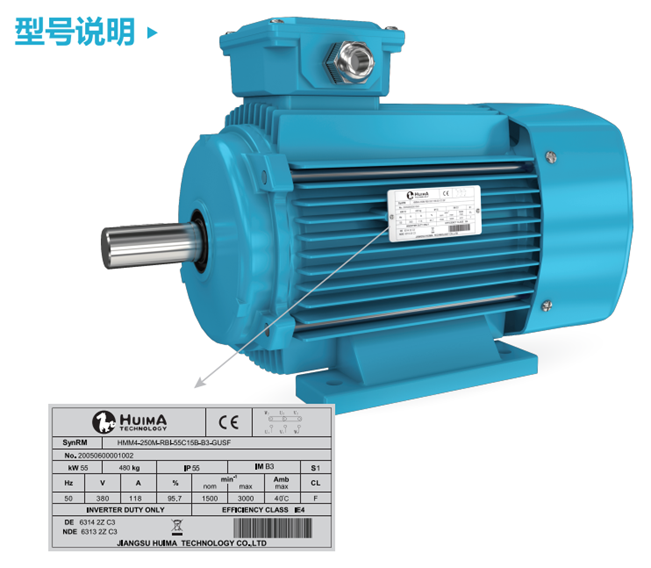
These motors deliver IE4/IE5-level efficiency, with no rotor eddy current loss thanks to a novel reluctance rotor design. They offer high starting torque, a wide speed range (0-100Hz), and low noise and vibration. With no rare earth permanent magnets, they eliminate demagnetization risks, ensuring long-term reliability.
Ideal for plastic machinery, air compressors, fans, and pumps, these motors can directly replace traditional low-efficiency asynchronous motors (same installation dimensions) while reducing energy consumption by 5-40%.
PMDD motors eliminate mechanical transmission components (e.g., reducers, hydraulic couplers), reducing power loss and maintenance needs. They achieve IE5-level efficiency, with a power factor of up to 0.98, minimizing reactive power loss for the grid.
Their compact design and stable operation make them suitable for large fans, wastewater treatment pumps, and material handling equipment. The use of high-performance neodymium-iron-boron permanent magnets, combined with anti-demagnetization technology, ensures reliability even in harsh industrial environments.
Designed specifically for the reducer market, these motors feature a compact structure (one frame size smaller than equivalent-power asynchronous motors) and modular design—flanges of the same frame size are interchangeable. They maintain high efficiency across a wide speed range (25%-120% of rated speed) and offer lower temperature rise (5K-15K less than asynchronous motors) and noise.
Available in power ranges from 0.55kW to 22kW, they directly replace traditional "asynchronous motor + frequency converter" solutions, suitable for reducer systems in various industrial machinery.
All these motors comply with IEC standards, with flexible customization options (e.g., shaft length, flange material, wire outlet position) to meet specific application needs.
Single-phase and three-phase motors serve distinct roles in industrial settings: single-phase motors are cost-effective for light, intermittent auxiliary tasks, while three-phase motors are the reliable, efficient choice for heavy-duty, continuous production.
The key to selection lies in aligning the motor’s characteristics with your power requirements, power supply, and operational conditions. For modern industrial operations prioritizing energy conservation, carbon reduction, and operational stability, advanced three-phase solutions—such as synchronous reluctance, permanent magnet direct drive, and permanent magnet direct-coupled motors—offer tailored performance to optimize productivity and reduce costs.
Choosing the right motor is more than a technical decision; it’s an investment in the long-term efficiency and sustainability of your industrial operations.

